Friday, April 11, 2014

Learn to be your own wardrobe consultant


If you are in the market to select a image/ wardrobe consultant to help you with your wardrobe issues, please bear in mind the following three points:

1. Comfortable & inspired

You have to feel comfortable & inspired by the person you hire.

If you havent met them, after reviewing their website or Facebook page, have a coffee with them. In effect, you are interviewing them. 

At this session, you can ask questions & they can outline what they offer and together you can pick what's suitable for your specific needs.

Services tend to be quite standard & can be offered singlely or as packages, for a single person or for groups (mum, best friends etc).

The services can include occasion shopping, seasonal wardrobe top up, a wardrobe cull, identifying what flatters you (styles and/or colours), professional image tips, glamour/photography looks, hair & beauty tips etc. The better consultants will make you feel excited but calm about working with them. It will feel easy to select what suits your style and budget. 

All reputable consultant will offer the coffee chat as a complimentary part of the service.  

2. Planning 

Unless you are shopping for a very specific occasion, be very wary of any image/wardrobe consultant who offers you a package which involves more time shopping & less time planning/culling.

Coming away with bags of new clothes, without specific & detailed planning based on what is in your wardrobe at the moment, is destined wardrobe disaster. In this case I can 100% guarantee you that you will wear 80% of what you bought in that spree 20% of the time. 

If the consultant doesnt do the specific/detailed planning with you or suggest very clearly that shopping without that planning is of limited value, you are about to waste serious money. 

3. Communication

I'm going to be blunt here. 
Some wardrobe/image consultants cant communicate to save their lives.  Yes they can speak English well and they can style & they know when a look works and when it doesnt.

But here are the really critical practical applications: 

a) They cant explain WHY a look/colour works and WHY it doesnt. 

They cant explain to you why the lines on this particular garment work well for you & why the lines on that particular garment arent working for you. A good image consultant will TEACH you what lines to look for and what lines to avoid for your height & body shape. 

b) They cant show you which colours suit you, in the store, without putting you through their formal colour analysis (at additional cost) off site. A good image consultant can literally TEACH you your best colours in the store by playing with garments on hangers. They can give you the swatches without putting you through the formal colour analysis and only charge you the cost of those swatches. 

You see, without being TAUGHT to understand your colours, merely holding those swatches up every time you like a garment can get quite painful. When you understand your colours, you can walk into a store & automatically know 95% of the stories to avoid without holding up the swatch book. If you are TAUGHT correctly, it becomes innate. A good image consultant will TEACH you so you can stand on your own two feet.    

The only way to get real value for money with an image/style session is if the person you have hired has a command of English that can explain WHY, each step of the way.
Why is code for "Please explain in what way specifically this works or doesnt". Why is code for the consultant is articulate.

Why that colour works for you
Why that colour doesnt work for you
What it is about that hemline's placement that works
What it is about that sleeve shape that doesnt work
What it is about the silhouette that works
What it is about the fabric that works (body, texture, shine etc)
Why that waist line works for you
Why the placement of those darts doesnt work for you
Why those zips are not your best friend

Examples

Example 1

An image consultant may put up photos of clients which show one client with a complexion which was "clear" versus another client with a complexion which was "muted".

[The point of this is that the clear (high contrast) client looks best in clear shades while the muted (low contrast) client looks best in muted shades.]

Firstly, no explanation accompanies the photos. 
Secondly, a reader may comment that she doesn't understand "muted".

The image consultant may respond with something along the lines of "Clear is clear, muted is not clear or bright but soft". 

I don't consider this a value for money answer. I would expect better. It is merely parroting the jargon without explaining it. 

Example 2

An image consultant may state that this isnt the most flattering hem length for the Duchess.  
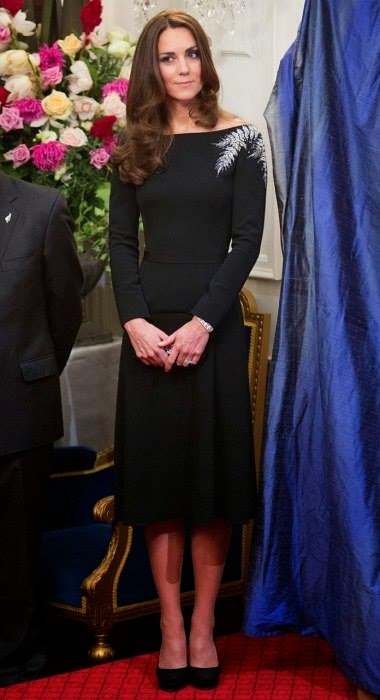

If the only explanation they give is that hemlines which are "in no man's land" or "neither here nor there" are not flattering, I would say that doesn't suffice. 

Nor would an explanation which stated that "longer hemlines make legs look shorter". This just isnt true even as a general statement. 

The real reason this isnt technically flattering is because the hemline cuts at the widest point of her calves. However for completeness, because she is so slim/tall, it isnt a real issue in style terms, in this case.  

Example 3

This example is what prompted this post. This one is a real life example.

Here are descriptions of two image/colour/style courses, as shown in the local community college brochure. Both paragraphs are written by the respective teachers.  

Course A is a bit more expensive than Course B. 

Which would you choose? 


Cost aside, Course A's description runs rings around Course B. Notice how the wording of A is articulate, precise, informative and reasonably clear? In short, it makes sense & it flows logically.

The wording in Course B is all over the shop (pun intended). Not only does it lack stucture (intro, body, punchline) but the sentences arent even complete. I wouldnt expect her to be able to TEACH me anything, let alone image consulting. 

Summary

Unless the image consultant TEACHES you to be your own image consultant, how are you ever going to stand on your own two feet? You will literally need them every time you spring clean or shop and that's impractical, costly & plain silly.

If you dont want to hear this information, you just let them know. But being offered this information is what distinguishes the great image consultants from the rest. 


Monday, April 7, 2014

Fabric & construction 101: those tummy holes


Some tee shirt holes are deliberate.
Like the $1.6K Balmain khaki tee from a few seasons ago.

Some tee shirt holes are not deliberate. 
Like those tiny holes on the tummy area of your tee shirts.

Fact: Most of the time, those tiny holes are not a manufacturing issue nor a fault of the brand. 

Sorry, that's not what you want to hear.  

But it's the truth.

Fact: Those tiny holes are caused by friction - when the tee rubs against something. That something is generally an external surface or your clothing. Often both. 

Fact: The nasty external surfaces tend to be seat belts or the sides of bench tops.

Fact: The nasty clothing tends to be your jean fly - because the fly is a really rough surface or the edge of the fly, which is also a tough section of fabric. 

Fact: Tee shirts come in a variety of fabrics & weaves.

Fact: The tiny holes are pretty much guaranteed on cotton tees, especially where it is a fine weave.

Fact: The fact that the tee cost alot of money (think uber designer or James Perse, Majestic, Enza Costa and anything in pima cotton) makes absolutely no difference. 

In fact, the expensive brands do fine weaves far more often than cheaper brands, so you will see the issue more in that more expensive space. 

Fact: the tiny holes are rare on tees which have elastene or a synthetic mix. 

Fact: The tees which tend to exhibit this issue tend to be worn loose. So wearing a tee loose doesn't make the problem go away.

Fact: Doing the half tuck with your tee may help to manage the problem as the tee isnt rubbing against the fly front. But if a tee is fine, the half tuck may cause other pulling issues. 

Here is a blog to inspire you with the half tuck: 

http://styleintoaction.blogspot.com.au/2013/12/10-ways-with-half-tuck-top.html


Fact: If you want to make this problem go away, short of locking yourself in a room for the rest of your life and not moving much, don't buy those tee shirts which make this problem highly likely. 

Fact: If you insist on buying those tees, then wear a cami underneath than covers the jeans fly area, so the tee doesnt rub directly against it. The stretch strappy singlet tops which are sold in discount stores are fine for this - just make sure they dont rise up as you move around, hence exposing the fly front to the tee. Make sure they have enough length in the torso. 

Fact: If you buy one of these fine tees, there is a good chance the hole will happen on the first or second wear. But I can guarantee you that it wont happen on a thick model with elastene.

Usually I am the first person to expect more from the retailer. In this case, it's not the retailer's fault. 

Frankly I think these tees should be flagged as "delicate around the tummy especially with jeans", just like garments are often flagged as open weaves and delicate with jewellery. 

Fact: The factors mentioned above all contribute to create these tiny holes. It's a reasonable outcome. It's reasonable wear & tear. 

Normally brands won't provide a remedy to the customer for wear & tear. Normally remedies are for faulty goods, where a product wont stand up to reasonable wear & tear.

The tiny holes are not a fault. They are simply wear & tear. 
They are reasonable wear & tear. 

But if you use your common sense and buy something else, this wont be a problem. 

Please dont wait until you have five tees, all from the same brand, all with the same problem to complain. 

Why not complain after it's happened say, the second time?

Why complain if it's not a fault?

A retailer will often resolve your issue favourably in the interests of maintaining customer goodwill. Even if they are not at fault. This is good. 

The more of an issue you make it, the more publicly you raise it, say in the store in front of other customers or on social media, the more likely it will resolve in your favour. 

But instead of complaining about an inevitable issues, it may be better to avoid it by altering your buying habits.  


Naked pregnant magazine covers


1991 by Fran Leibovitz


1999


2003


2004


2006 - subscriber cover


2006 


2006


2006


2007


2007


2009


2008 


2010


2010


2011


2011


2011


2011


2012


2013


2014

Friday, March 28, 2014

Witchery skirt - you get what you pay for


Style into Action literally left skid marks today, heading for the Witchery shop, to try on the skirt circled above. 

After seeing it on the Witchery blog, it was a drop everything and think about nothing else until she had explored this. 

It was a fixed wrap (no adjusting 20 times a day & no accidental openings)


How could anyone not love this skirt?

In black (nuff said)

Wide band at the waist which keeps the tummy in (nuff said here too)

Angular lines (slimming)

Pleating/ruching at top but pencil width at the knee (perfect for pear shapes, or the always annoying hourglasses & due to the diagonal lines, it may work well for a rectangle too).


So, so, so, so nice...

Knee length - no unflattering midi proportions to deal with.


Leather waistband (a better look & a sturdier look as pleather rips easily on seams).

$150 - reasonable price, in fact, great price for a leather trimmed item

In short, it looked like the holy grail of black skirts. Hence the skid marks. 

At the store, this is what I saw.....on all of them. 


The finish along the top of the leather band was awful. I get goose bumps thinking about it.

Even though I loved the weighty stretch fabric & the style, the making at the top is horrible. 

I didnt try it on - there was no point. I felt icky looking at it. 

Extra horribleness was present if you tuck your top in, but just plain horribleness, even if the top is out. Mind you, in this style, most tops would need to be tucked in, otherwise they would compete with the leather band/pleats of the skirt and the eye would convulse trying to understand what is going on. 

Then the penny dropped: You get what you pay for. 

There is no way you can get a decently constructed piece with leather trim for $150 without some serious compromises. 

Don't expect otherwise & especially don't expect miracles from the high street. 

Sometimes you hope the compromises are small or not visible, but often they are big & visible. Like here. 

Even if the compromises are not visible, you still need to feel good about wearing the item - the moment you get that shivery goose bump feeling - run away - fast. 

Yes, I was disappointed about not being able to court this skirt, but if I listened to my preaching, I would have known better. 

I wouldnt touch this skirt in a gazillion years & frankly. In fact, this skirt helps to prove to me that anyone (like Tash, the brunette in the photo), who wears high end like Chanel on a regular basis, has got to be getting paid a decent rate to wear this item.  

Have you seen anything lately which you loved on screen & were disappointed with in person?


Saturday, March 22, 2014

Job Interview - What do I wear?


I know a lot about presenting for interviews but my experience doesn’t come from my image consulting/styling work.

It comes from spending 20 years in CBD corporate, doing specialized tax work, including many years of investment banking. In the process, I recruited hundreds of candidates for teams within these large firms.  I have seen the best and walking around the CBD at lunchtime has allowed me to see the worst.

This blog will take you through some non negotiable no brainers in interview dressing. But bear in mind, that even something which is non negotiable may need to be negotiated in specific circumstances. So if I say "you can never wear sandals to an interview", but you broke your foot and it’s still healing, then the non negotiable becomes negotiable.  If you provide specific facts to your situation, I can take that into account. In the absence of specifics, here we go….

Never wear jeans

“Never wear jeans” to an interview applies whether you are a 16 yo who is going for a job at McDonalds or a person going for a cleaning job or someone going to a mine site for an interview as a blue collar tradesman.  Why? There will be others in jeans & qualifications & experience aside, if you dress smarter than them, you will get the job, as long as you don’t look like a goose. Frankly I have never seen a smart pair of dress slacks make anyone look like a goose.  But there may be a situation where jeans are appropriate, I cant think of one. If you can, by all means let me know.

Never wear stocking & open toe shoes

The other one is always wear stockings & never wear open toed shoes or sandals. I don’t care how hot it is and I certainly don’t care how good your legs are, these two pre-requisites are virtually not negotiable – unless you want to give me some more specific facts to consider.

Not all offices are created equal

In the absence of specifics, I’d like to start with dress for interviews for office jobs because more than half of us work in offices. Yes, offices vary – some are fashion firms, art galleries or flamboyant creative companies, others are more conservative - think telcos, finance, property, accounting, medical etc. Then there are the people professions like retail, hospitality, teaching & aged care, amongst others. 

Jobs within these industries vary too – so the accountant in a fashion firm or fashion magazine will dress noticeably more conservatively than the designer or fashion editor. The marketing or sales person in a finance company will dress more conservatively than the same person in an advertising firm.

Most office interview outfits are created equal

If you are approaching an office interview at entry level to supervisor to mid manager level, if you don’t dress in a tailored type suit (matched or harmoniously unmatched) you are doing yourself a disservice. Why? Because there will be other with whom you are competing who will choose that style of dress and when that happens, you will be behind the eight ball.


The interview has higher dress standards than the job

The first thing you need to remember is that what you wear on the job is not the standard by which you dress for the interview. The interview demands the highest of standards. You can relax those standards at the job, but if you want to be promoted, there’s a whole other blog post on how much to relax them by. Let me know if you want to discuss that and how to work casual Friday too.

Business casual

Let's think of it another way. Alot of offices have a business casual policy as it improves morale. Basically this means suit not required and you can relax your separates to say chinos or a polo instead of business suits worn as separates. 

Why would you ever attend an interview for an office job in similar relaxed clothing, when it is unlikely that you know whether the office has a dress down policy. Even if it does, an interview demands higher dress standards than the job. 

If you don’t look the part, someone else will

The second thing you need to remember is that you are competing against others for the job.  If you have similar experience and qualifications to the next fellow, and you are dressed better/smarter, you will be in the lead for the job.  That’s why there are no brainers in interview clothing, which apply no matter what category of job you are applying for:

* Clothing that fits & isn’t pulling & bunching etc
* Everything pressed beautifully
* No scuffed heels/toes
* No peek-a-boob shirt
* No laddered stocking (keep a spare in your bag)
* No cleavage
* Knee length skirts
* No chipped nail polish
* Cover all tattoos
* Remove visible body piercings
* No VPL
* No jeans
I could go on, but all you have to do is google this.

The subconscious indicators

Thirdly, there are items which put you ahead sub consciously.
A jacket is one of them. If you are walking into an air conditioned office, in a pair of smart pants or skirt (code for not a flamboyant outfit), then wear the jacket. It will give you credibility and authority & maturity that your non jacket competitors will never bring to the table.

Others may include:

* panty hose
* the closed toe shoe
* a neckline that has a piece of jewellery filling the décolletage space
* hair tied back (to avoid the “glamour look” or fiddling with it when you   are nervous)
* a heel (but not to the extent that they are uncomfortable to walk in) - many studies show that you have more presence & authority in a heel than a flat
* pulling out a notebook & asking if you can take notes
  (& actually taking some notes)
* sending a thank you email

If you want me to expand on the subconscious indicators, it’ll be a whole other blog. Just ask.

Appearances cant be distracting - ever

Fourth, we need to talk about distractions.

An interviewer looks for certain preliminary things. Once he/she finds them, he/she ticks them off in their head (or a checklist – yes, the big firms do have them). Once ticked off, he/she can move to the juicy stuff – namely your background, experience, communication skills & your fit within the team.

If the interviewer gets distracted with the preliminaries, it’s like you are experiencing a road hump during the interview.  Road humps are not good especially if your competition isn’t experiencing them.

One of these is that you are prompt & punctual. The other is that you dressed/groomed appropriately, so your clothing doesn’t become a distraction to the juicy stuff.  

In a non flamboyant office job, the interviewer doesn’t want to see that you stand out sartorially speaking.  They just want to see that you fit in.

You see, in an office job, the interviewer doesn’t give two hoots if you are wearing a red top or a blue top or a white top. But if you wear the colour that flatters your face, it will ensure the highest level of engagement from the interviewer as they wont think that you had a late night & don’t care about getting the job.   

Even if everyone seems to be wearing white tops, the interviewer doesn’t don’t care – unless the top looks sloppy.  All they want is to tick off appearance so they can get to the juicy stuff.  If colour is your thing, wear it, but in conservative industries, head to toe colour, at entry-mid manager level, may create an impression that causes distraction. Once you get to the executive levels, you can do whatever you like, but even at the senior manager levels, too much whimsy at interview time isnt advised. 

Interviewers don’t care of you wear a print or a plain top. But if the print is really eye assaulting or optical illusiony, it will distract the interviewer from the juicy stuff at some stage during the interview.

The interviewer doesn’t care of you are wearing a dress and a jacket or a suit. If its business like, as long as it suits you and flatters you and it’s fine.

If you fill your neckline with a bold necklace it will distract from the juicy stuff compared to a more subtle necklace.  Please don’t try to tell me that you need the bold piece to show your personality. If it’s a non flamboyant office and you go with a bold piece next to your face, it will create distractions for the interviewer. Accept that & dont complain if you wear it & dont get the job. 

So will a bangle which jingle jangles during the interview.

You can wear a bright shoe with a suit, but sometimes the combination of too many bright pieces will be too distracting – so you need to assess the whole package before you finalise the outfit.

Whatever you wear, if there is a pulled thread or its creased (especially around your face) or its tugging/pulling, I guarantee you that during a 45 minute interview, it will be noticed & it will distracted from the juicy stuff. 

The other thing that gets noticed is your cuffs because your hands sit on/above the table in plain sight. If your cuffs are too long and you have folded them up - reconsider. Get them altered - nothing looks more "I couldnt be bothered to go to the trouble to do this right" or "if I take short cuts with my dress, I will take short cuts in your business".  

You can wear a contrasting jacket, just be 100% sure its your best colour and the fit/trims don't remind anyone of the 80s.

Yes, you can wear a Mary Jane shoe in a conservative colour, but Mary Janes have a girly softness about them than a non strappy pump doesn’t have. As long as you are aware of that, then by all means, wear them if you want to.

For the non flamboyant office jobs, I suggest against wearing fashion trends like oversize coats, or booties or full waist pleated pants, chunky sweaters or anything that suggests a previous era. I would even avoid a small scale gingham print shirt because it will remind some interviewers of Pizza Hut tablecloths.

Another thing to note – no matter how lovely you think you look, if the interviewer comments on your lovely shirt, shoes, necklace, brooch or whatever, I can guarantee you that your chances of getting the job just plummeted. Why? The interviewer wasn’t bonding with you & your love of fashion. They only mention your appearance because the candidate’s juicy stuff isn’t impressing them. If the juicy stuff was impressing them, they wouldn’t be talking about your clothes.

You see, you cant risk wearing anything that could create an image or connotation that isn’t about the juicy stuff. If you think “this gingham top wont look like a Pizza Hut tablecloth because its blue”, I can guarantee you that some interviewers will go there. You cannot afford to dress even if the distraction odds are low. You need to dress in a way that there are no distraction odds that you can think of. I’d also get the opinion of someone more experienced to see if the outfit conjures up anything you haven’t thought of.

Personality?

For anyone who thinks that the corporate look means no personality – it doesn’t. You can wear colour, just make it appropriate. You can wear jewellery, just make it appropriate. You can wear an unmatched suit, just make it harmonious rather than highly contrasting.  

An interview is not the place to show an interviewer that you love the boho style or the rock chic style or a romantic style or a whimsical style. The style that will get you the most points is a classic style. You need to adapt to that for the sake of that 1 hour & possibly a second hour for a second interview. If you think that is too hard, you may need to change you line of work. 

Smart candidates think like an employer

Finally, when I hire someone to do a job, all other things being equal, I want the person who demonstrates the most professionalism. Professionalism implies you care. If I am paying you a salary, I'd better see that your care or I will cross you off my list. In fact, if I see candidates in suits and candidates in relaxed clothing, it’s a no brainer who I will go for. Think like an interviewer and you’ll come round to my way of thinking.....

Sunday, March 16, 2014

10 Ways for St Patrick's Day - it's easy being green

1. A wee accessory


2. Toning it, rocking it


3. Contrast


4. Head to toe


5. Summer's soft pastels 


6. A statement coat


7. Running errands


- when those errands are smart


8. Pretty it up with a dress or skirt


in Josh Goot


9. Leather & fur


10. Animal & camo


TIPS FOR BEING GREEN:

If it's near your face, make sure it's your best shade - blue undertones for cool complexions & yellow undertones for warm complexions

if you're contrasting the green with a pastel, put the darker shade where you want to look smaller & the lighter shade where you are happy to look bigger.

Toning & all over green will slim you more than when you are contrasting sections of your body.

Green can be quite a lary colour, so tone it down with texture, not wearing it top to toe or softening the shade. 


Happy St Patrick's Day, 2014!